
Agentic AI: Opportunities and challenges in a changing battlespace
Henrik Sommer on why agentic AI is a force multiplier and why those who ignore it will be left behind

Agentic AI could transform military planning and operations, conducting complex tasks autonomously and at rapid speed. What will this mean for militaries and their industry partners, and what challenges must they overcome?
Artificial intelligence (AI) is now a major focus for armed forces around the world. Algorithms are being deployed in a variety of roles, helping planners and personnel to accomplish a range of tasks in everything from intelligence analysis to planning and decision support.
Agentic AI would take this a step further. While many of today’s AI systems work in a passive manner, responding to requests for individual tasks, agentic AI operates largely independently. Multiple agents communicate with one another, collaborating to achieve a certain goal with minimal need for human interaction.
Autonomous collaboration
According to Henrik Sommer, Director at Systematic and former Brigadier General in the Royal Danish Army, this capability holds strong potential for militaries, particularly at the operational and strategic layer. Agentic AI’s autonomy and ability to interact with vast amounts of data could be highly effective for military staffs, in such areas as intelligence, operations and logistics planning.
What does this mean in practical terms? Sommer noted how military planning often involves the interaction of multiple sub-tasks, such as terrain analysis and enemy analysis. AI algorithms can be trained to understand the required processes for each of these elements and to work together as required.
For example, in the land domain, headquarters level command can do an automatic terrain analysis and forward to results to echelons at the frontline and edge of the battlespace.
“A specific AI agent could use satellite images to make that analysis and turn that terrain analysis into guidelines that can be used for planning purposes,” Sommer explained. “Where can you move unrestricted? Where are the cities? Where are the rivers? Where do we have roads and bridges, or where do we have woods?”
Things get more complex when another application is needed. For example, the ability to combine this terrain analysis with enemy analysis, in terms of equipment and numbers, activities, weaknesses and strengths, another analyzing the enemy doctrine and so on.
Listen to Henrik's recent appearance on the Command & Control podcast
This is where agentic AI comes in.
“The two algorithms – terrain analysis and enemy analysis – would combine their efforts in a force multiplying effect, helping military planners to deal with complicated or surprising scenarios,” said Sommer.
“We need several agents to come up with an answer for a complicated case where one agent is not enough,” Sommer explained. “That’s why agentic AI is so important.”
Need for experimentation
Agentic AI and its products are being incorporated across the SitaWare suite. It holds particular potential for the SitaWare Insight data-driven decision support tool and the SitaWare Headquarters C4ISR system, both of which are designed to support the activities of military staff personnel.
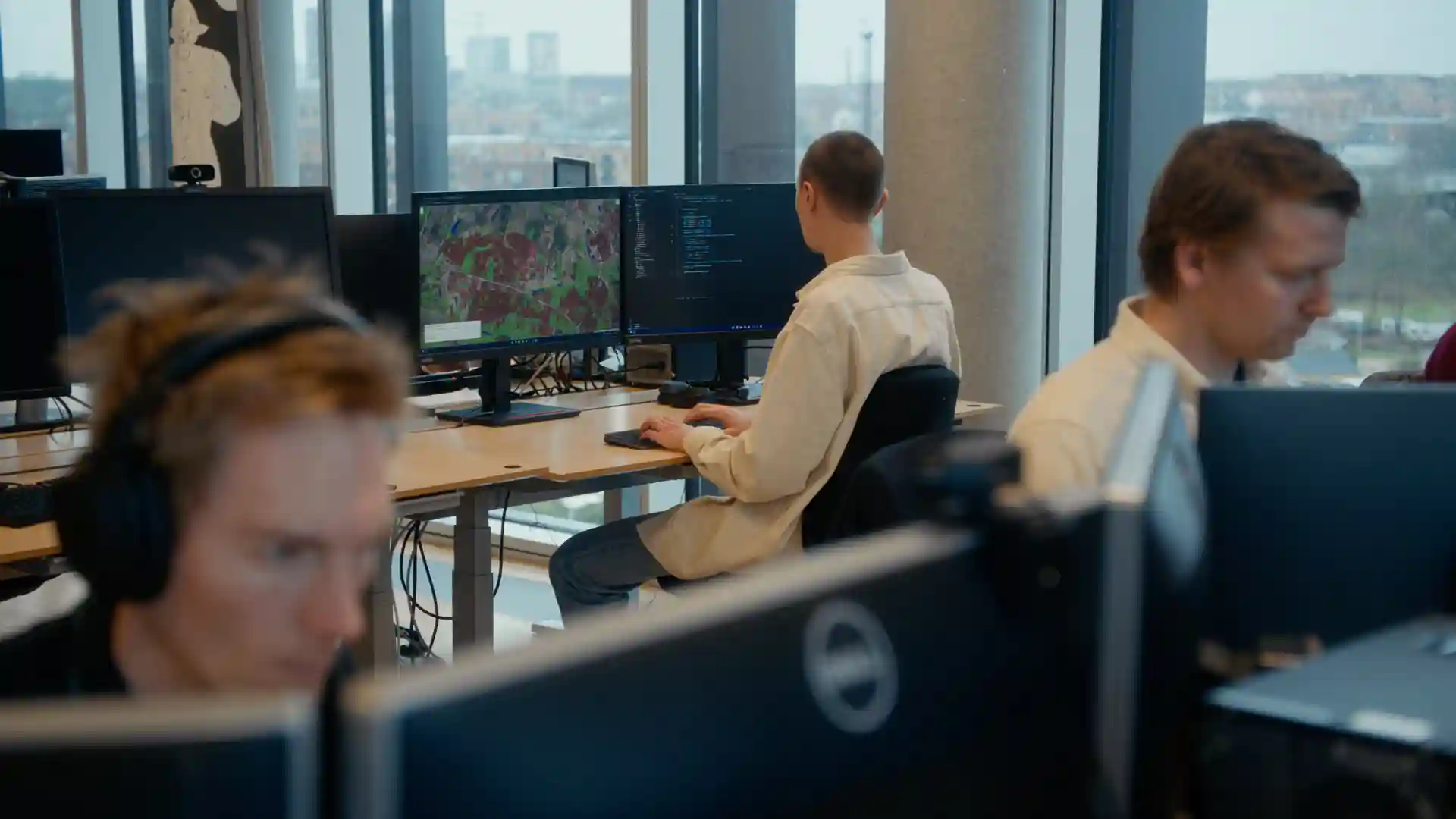
Experimentation is vital to truly understand the capabilities and reduce the potential risks of agentic AI, Sommer noted. It is important to first focus on the capabilities of the individual agents that will combine to create the agentic capability.
“Understanding the individual AI algorithms is very important to properly utilize agentic AI,” Sommer explained. “Can you trust that result if you don't know what's going on in the machine?”
Systematic’s approach is to analyze current processes and identify precisely where agentic AI will be useful in terms of saving time and analyzing large amounts of data, he noted.
The demand for reliable data
Sommer has been “really surprised by the capabilities of agentic AI.” However, he also warned of potential risks, which will be familiar to users of the technologies across sectors. For example, AI agents sometimes hallucinate, offering false or misleading conclusions to the operator. They can also struggle with misinformation.
Addressing these problems comes down to the data and the architecture of the software.
According to Sommer, credible data has long been a key focus for Systematic. SitaWare software is built to collect, analyze and disseminate data from the soldier on the ground up to the highest levels of command, giving it the widest possible reach: credibility is built-in to the system.
Despite the challenges, Sommer stressed that AI is only at the beginning. and has huge potential in complex processes. “In the military, there’s a lot of moving parts,” he said, noting that AI would also be useful in highly stressful situations like those faced by military personnel.
Human capabilities
The application of agentic AI for militaries is more likely to be an evolutionary than a revolutionary process, noted Sommer. Importantly, it is vital to determine the enduring role of the human in the loop, because the technology will still rely on the human perspective.
“When the commander sees a mission, he can decide to prioritize speed, surprise, or logistics sustainment. AI cannot decide on these priorities by itself, but humans can,” said Sommer.
Similarly, AI can present a range of options based on information, but in the end it is the commander who assess the recommendations, makes the final decision and carries the responsibility.
“Humans will remain essential when it comes to proposing and anticipating surprises, which is essential on the battlefield,” Sommer explained.
It will be crucial to strike the right balance between the capabilities of agentic AI and human experience and intelligence. Nonetheless, AI will be essential for militaries in the coming years, and Sommer warns that those who fail to embrace it will be left behind.
Sommer said. “You will be overrun every time – the enemy will always be two steps ahead of you.”
Newsletter
Cannot see the form?
Your privacy or security settings may be blocking the form.
Explore more blogs
 The interoperability problem: Michael Holm on why allied forces still can't talk to each otherAn excerpt from Michael Holm's appearance on the Command and Control PodcastRead more
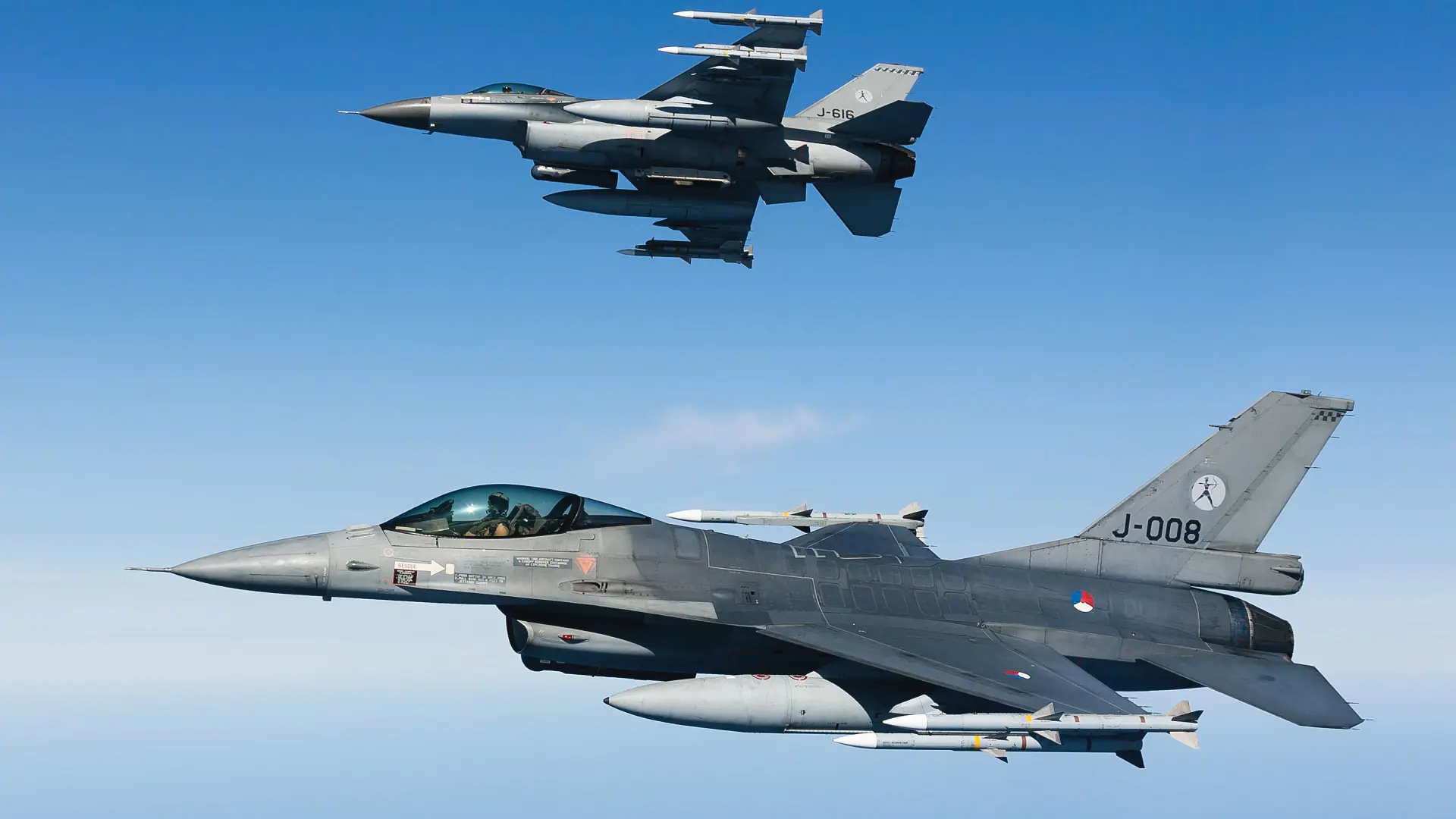 Why integrated Air C2 is critical to unlocking NATO’s Multi-Domain ambitionSystematic's Mads Würtz shares his take on Air Command & Control acting as real enabler of Multi-Domain Operations in coalition contexts. When the recognised air picture and air planning processes are disconnected from land manoeuvre, maritime operations, or ground-based air defence, friction emerges exactly where speed is most critical.Read more
 The future of C2: Lessons from Ukraine, the push for speed, and the case for sovereigntyAn excerpt from Michael Holm's appearance on the Command and Control PodcastRead more
 C2 for deterrence?Deterrence does not demand a separate command-and-control system, but rather a more credible, integrated, and wartime-ready form of C2 capable of spanning multiple domainsRead more
 Command and Control transformation in the Middle EastAcross the Middle East, the transformation we’re witnessing mirrors global trends: integrated networks, data-driven decision-making, AI, and joint interoperability are no longer optional — they are imperative.Read more
 Frankenstein, JADC2, and the future of warfighting acquisition: An industry perspectiveWithout disciplined architecture and unified standards, the future of command‑and‑control risks becoming a Frankenstein of mismatched systems rather than a coherent warfighting capability.Read more
 Technical interoperability in contested environments is a mustThe U.S. Navy must prioritize both seamless interoperability with allies and resilience in contested communications to ensure credible combat power at seaRead more
 From concept to capability: Multi-Domain OperationsSupporting NATO in its evolutionary digital journeyRead more