
The interoperability problem: Michael Holm on why allied forces still can't talk to each other
This blog is based on an excerpt from a recent interview between Dr. Peter Roberts and Systematic founder Michael Holm on the Command and Control podcast. You can listen to the entire episode here.
On a recent episode of the Command and Control Podcast, host Dr. Peter Roberts and Systematic founder Michael Holm traced the long, frustrating history of interoperability in defense. And why, decades after NATO first standardized its data exchange protocols, allied forces still struggle to share information effectively.
The early days: getting the basics right
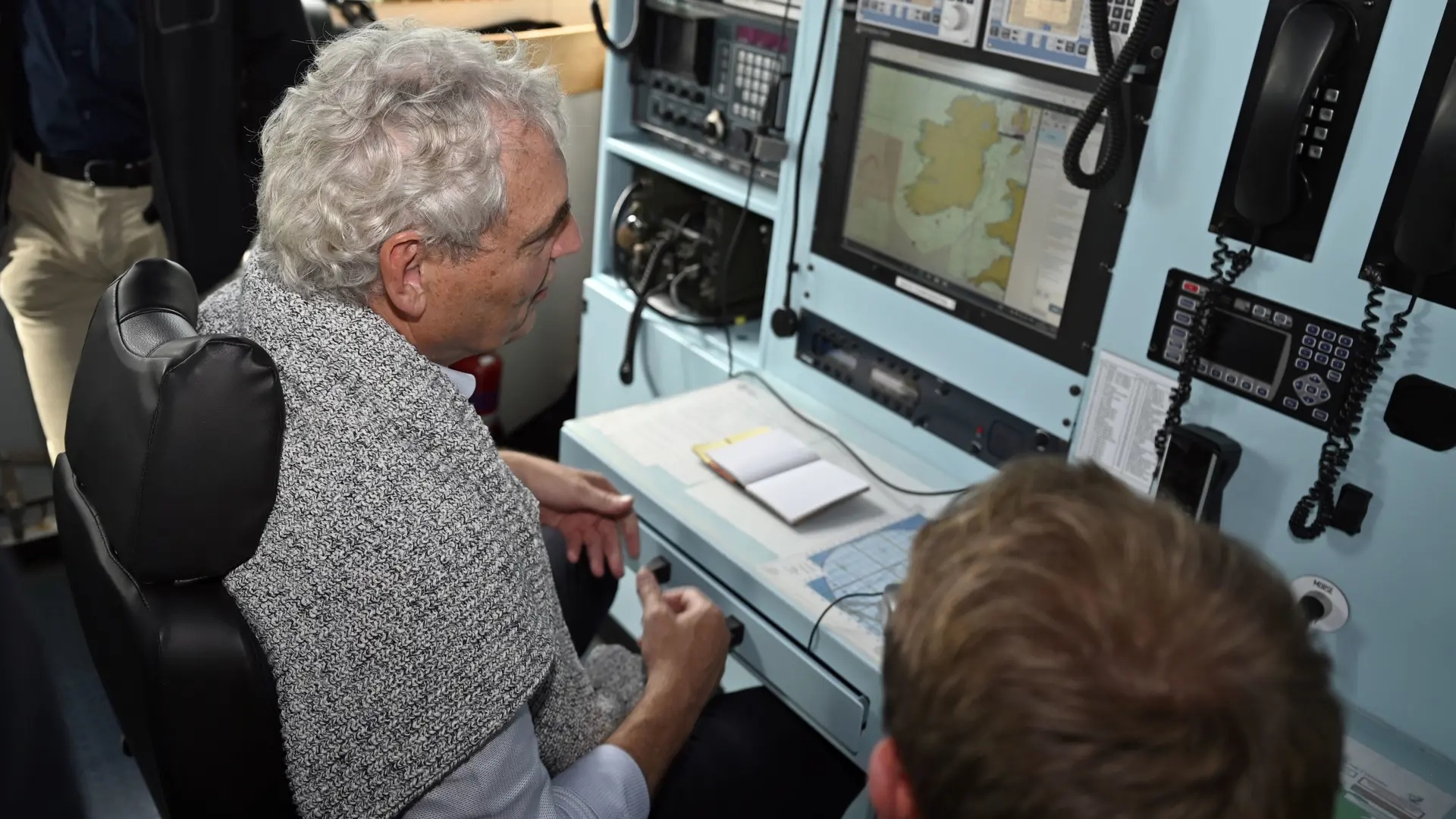
Holm's perspective on interoperability stretches back to the earliest days of digital military communications. He described a NATO landscape built on text-based message protocols, such as Allied Data Procedure Protocol No. 3, that allowed ships, shore stations, and aircraft to exchange standardized reports.
The system worked in theory, but in practice it was riddled with errors. Messages were punched into remote typewriters, and by the time they reached a computer, formatting mistakes and typos turned critical data into a mess.
"When it came into the system, it was a big mess about changing slant, double slant, and hyphen, and whatever happened to make sure it could be read by the computer," Holm recalled.
That problem became the seed of Systematic's first product. A tool that let operators compose and validate messages before sending them, ensuring they arrived error-free. It was a simple idea, but it addressed a real and persistent gap. The Germans eventually standardized on the system for their navy, and NATO headquarters, the US, and Australia adopted the authoring tools for designing and reviewing new message standards.
Standards existed but nobody could actually connect
What followed was a period that Holm described with frustration. The technology to dynamically update and exchange data across systems existed, but the large defense contractors who integrated these tools into national C2 systems had little incentive to make them flexible. They locked customers into specific versions, charging for every upgrade and integration.
"Most of the contractors didn't like our flexibility, because if they had flexibility, they could change and update without them getting a lot of money," Holm said. "They locked them into this specific conversion."
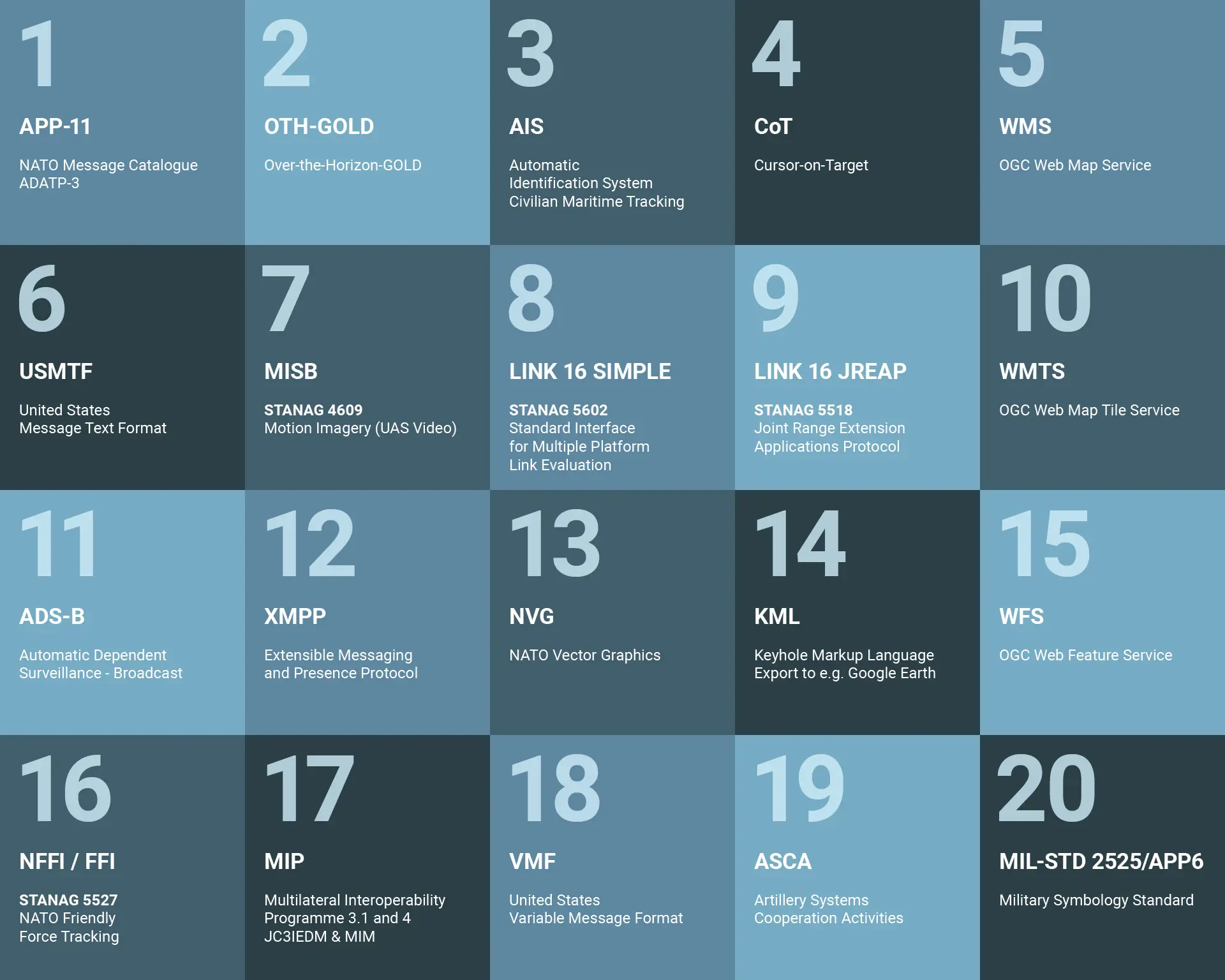
The result was an era of sovereign solutions. Every nation running its own bespoke system, built by a national champion, following roughly the same NATO standards but unable to meaningfully communicate with anyone else. Roberts put it simply: "But they couldn't still talk to each other." Holm agreed. Interoperability exercises at the time were focused on cabling and connection protocols, not on whether the content of the data being exchanged actually made sense.
From bespoke to product: A contrarian bet
The turning point in Holm's thinking came from an unlikely source, the enterprise software industry. Holm watched as large corporations in the 1980s and 90s moved from building their own financial systems in-house to adopting commercial products from SAP, Microsoft, and others. By the early 2000s, a CFO proposing to build a bespoke financial system "would be put out on the street," as Holm put it.
Holm saw no reason defense should be different. The idea that a single C2 product could serve multiple nations was, at the time, considered absurd.
"Many customers around the world said we were completely out of our minds," Holm recalled. "How would we ever believe that the Brits and the Germans and the French would have the same system? It was like never going to happen."
But Systematic pushed forward, building a minimum viable C2 system that could plan, display positions on a map, and most critically, exchange data with any other system or source. They sold it first to Slovenia, then to the UK for testing, and eventually won back the Danish Army contract after the previous supplier failed on exactly the capability Systematic had been building for years: interoperability.
Show, don't tell
Roberts observed that two qualities have defined Systematic's trajectory. A deep technical specialization and an instinct for solving military problems before the military fully articulates them. Holm framed it differently. Competing against the major defense primes on presentations and promises was a losing game.
"We will lose on PowerPoint," Holm said. "So we said,
The approach became a company philosophy. Show up with a working system, let the customer test it, start small, and scale from there.
"If you want to try a new car, we say here's a key, go drive," Holm said. "But other’s come with brochure and tell you what they were building three years' time."
The unfinished business of interoperability
Four decades on, the interoperability challenge Holm first encountered with garbled text messages on NATO typewriters has evolved but not disappeared. The technology is vastly more capable, but the structural incentives such as sovereign industrial policies, contractor lock-in, and the sheer complexity of aligning multinational systems continue to slow progress. As Roberts noted, there remains a tension between the doctrine of multi-domain operations, which demands seamless data sharing, and the political reality of nations insisting on their own solutions.
For Holm, the lesson of those four decades is clear. Interoperability has never been a purely technical problem. It's a problem of will, incentives, and whether the defense sector is willing to treat software the way every other industry learned to, as a product, not a project.
Newsletter
Cannot see the form?
Your privacy or security settings may be blocking the form.
Explore more blog posts
 Why integrated Air C2 is critical to unlocking NATO’s Multi-Domain ambitionSystematic's Mads Würtz shares his take on Air Command & Control acting as real enabler of Multi-Domain Operations in coalition contexts. When the recognised air picture and air planning processes are disconnected from land manoeuvre, maritime operations, or ground-based air defence, friction emerges exactly where speed is most critical.Read more
 The future of C2: Lessons from Ukraine, the push for speed, and the case for sovereigntyAn excerpt from Michael Holm's appearance on the Command and Control PodcastRead more
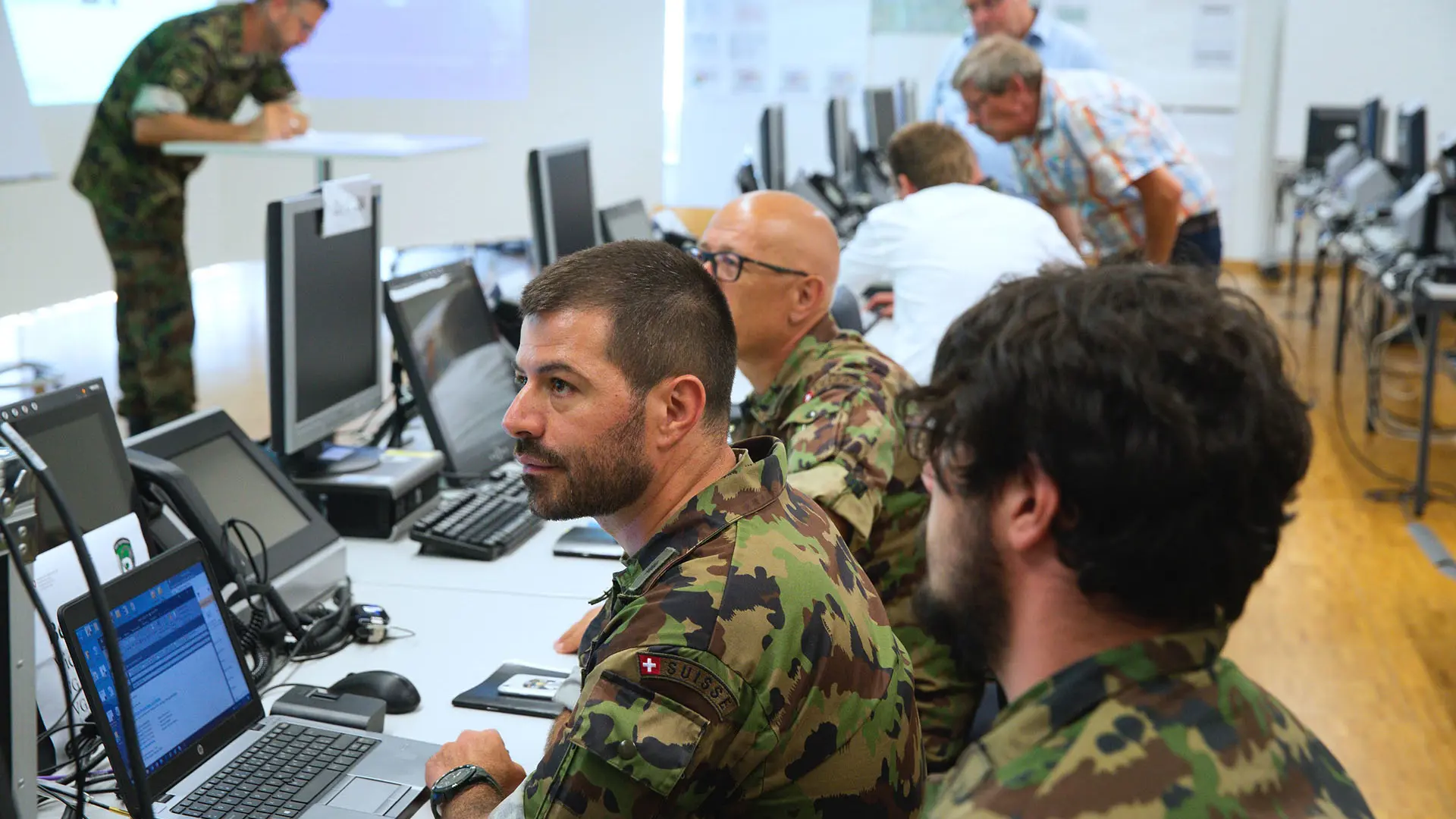 C2 for deterrence?Deterrence does not demand a separate command-and-control system, but rather a more credible, integrated, and wartime-ready form of C2 capable of spanning multiple domainsRead more
 Command and Control transformation in the Middle EastAcross the Middle East, the transformation we’re witnessing mirrors global trends: integrated networks, data-driven decision-making, AI, and joint interoperability are no longer optional — they are imperative.Read more
 Frankenstein, JADC2, and the future of warfighting acquisition: An industry perspectiveWithout disciplined architecture and unified standards, the future of command‑and‑control risks becoming a Frankenstein of mismatched systems rather than a coherent warfighting capability.Read more
 Technical interoperability in contested environments is a mustThe U.S. Navy must prioritize both seamless interoperability with allies and resilience in contested communications to ensure credible combat power at seaRead more
 From concept to capability: Multi-Domain OperationsSupporting NATO in its evolutionary digital journeyRead more
 Joint Fires: Surviving and exploiting the most lethal capability on the battlefieldShaping the future of joint fires: Insights from former royal artillery colonel, Tim VenthamRead more