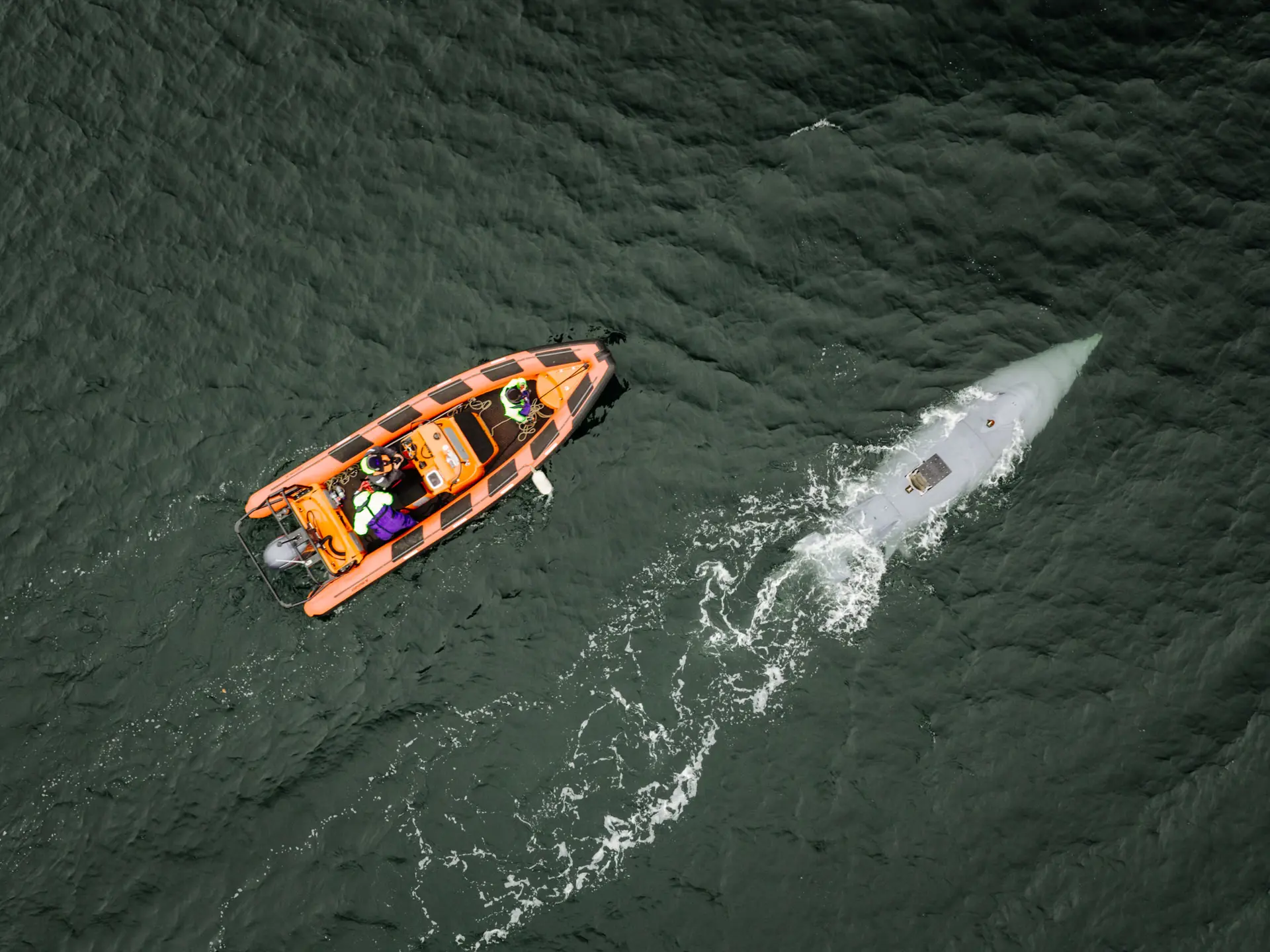
"It's not every day you get to play hero and villain at the same time"
For two weeks, five nations practised defending Baltic Sea cables and ports against attack. That takes cooperation at the highest level. But when the threats are hybrid, the defence has to be too.
By Lasse Krabbesmark, former Danish naval officer, now Product Manager at Systematic and Commander in the Royal Danish Naval Reserve.
In mid-April, I turned up at the naval base in Rostock with my colleague, each of us carrying a laptop. Around us, other participants were hauling in remotely operated submarines, drones and radar equipment. Military personnel in full uniform. Flags from five nations. And then the two of us with our laptops.
The exercise we had come for was SeaSEC Data2Sea 2026. The task: five countries working together to protect the power cables and data cables running along the Baltic seabed, along with ports and offshore platforms. The kind of infrastructure you never think about in everyday life, but that keeps the lights on and the internet running across northern Europe. Which makes it an obvious target.
For two weeks, more than 50 companies and around 100 military and police personnel from Denmark, Germany, the Netherlands, Norway and Sweden tried to crack that problem.
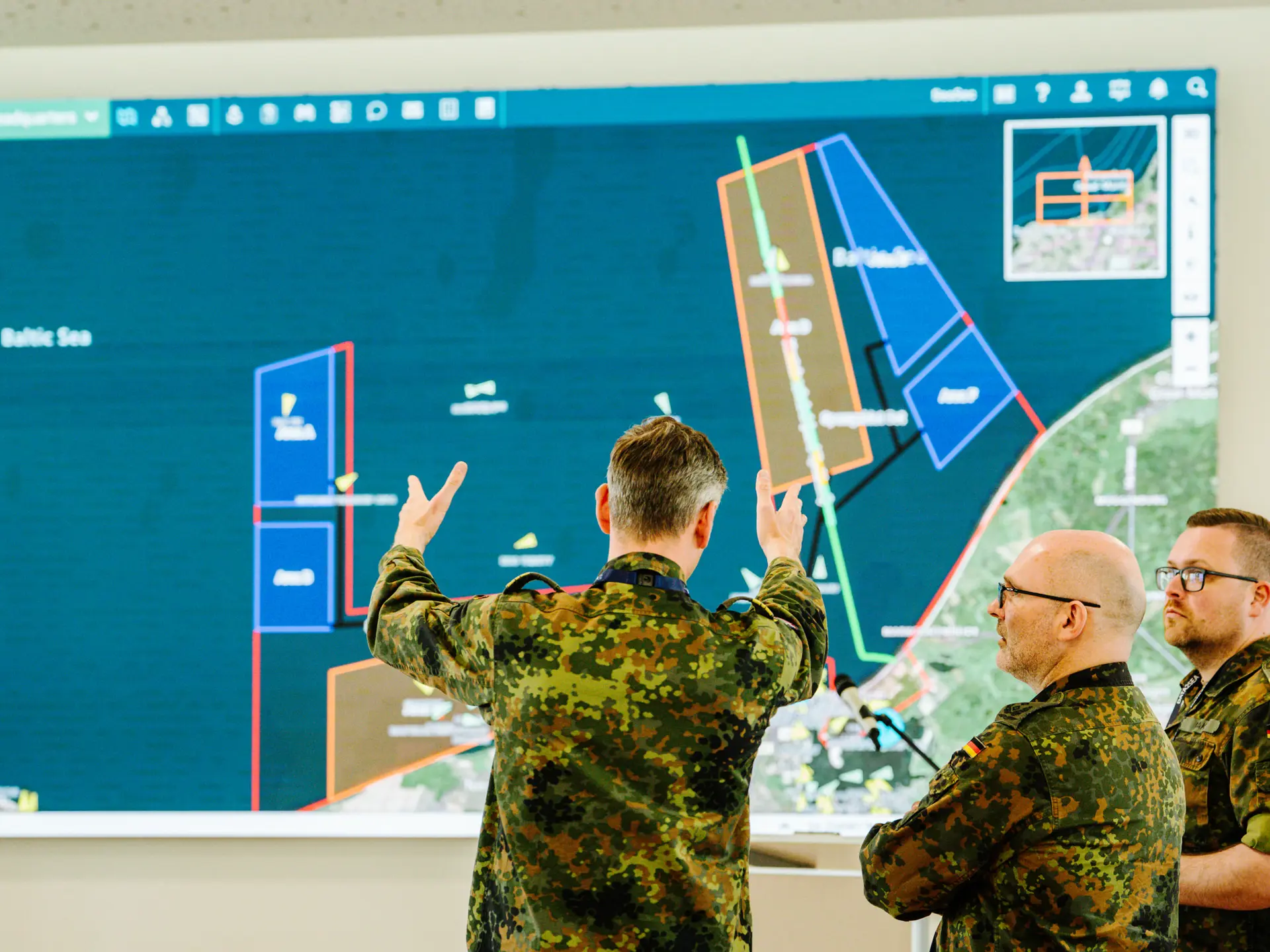
The scenarios were designed to feel real. Three scenarios, six competing teams. Multiple threats unfolded simultaneously, and nobody knew in advance what was coming or when. In one scenario, we had to protect a power cable on the seabed: detect suspicious activity, track it and report it before the situation escalated. In another, we defended an offshore platform. In the third, we secured a port against intrusion.
Civilian actors such as the Dutch transmission operator TenneT and Denmark's Energinet also took part. The threats to subsea infrastructure don't stop at the boundary between civilian and military, so the defence can't afford to be purely military either.
Then we armed the enemy

Part of Systematic's job was to give the exercise command a complete picture of what was going on. That is what the command-and-control system SitaWare Maritime does. Think of it as the digital map everyone looks at when decisions need to be made. It pulls together video surveillance, sensor data, positions and events from all manner of sources, from ships and radars to drones and underwater robots, and displays the lot on a single screen in real time. Around 50 countries use it in their defence forces, including most major NATO nations and NATO itself. At Data2Sea 2026, it ended up playing a central role.
But we didn't stop at giving SitaWare to our allies. We happened to notice that the Red Cell group, who played the enemy and coordinated all the attacks, were planning their operations in an Excel spreadsheet. Routes, timings, targets, all laid out in cells and tabs.
So, we offered them SitaWare.
After a few hours of introduction, they ran every attack from it. Planning, coordination, execution, all in the system that was built to defend against exactly those kinds of operations.
It's not every day you get to be both hero and villain.
SitaWare took centre stage
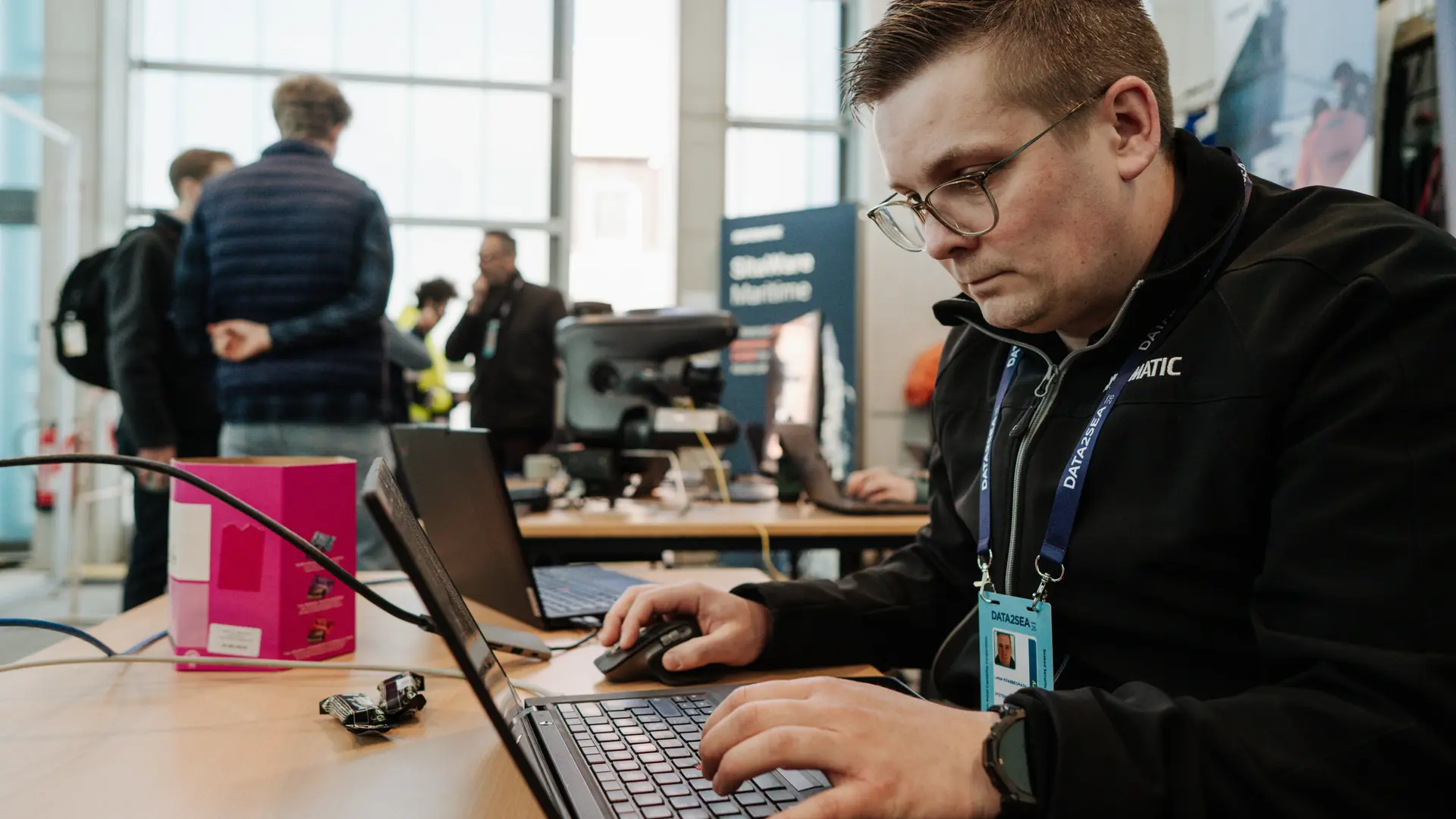
Giving everyone the same digital picture might sound simple. In practice, it's the hardest part: getting five countries' military, police, civilian agencies and fifty-odd companies to look at the same reality instead of their own version of it. Anyone who has ever tried to coordinate just two groups under time pressure knows what I'm talking about. Now try it with five nations.
We managed to become the shared reference point that people rallied around. Participants kept turning up with sensors that were plugged in on the fly, live, during the exercise. By the end, SitaWare was the primary system consolidating the picture across all six teams and all three scenarios.
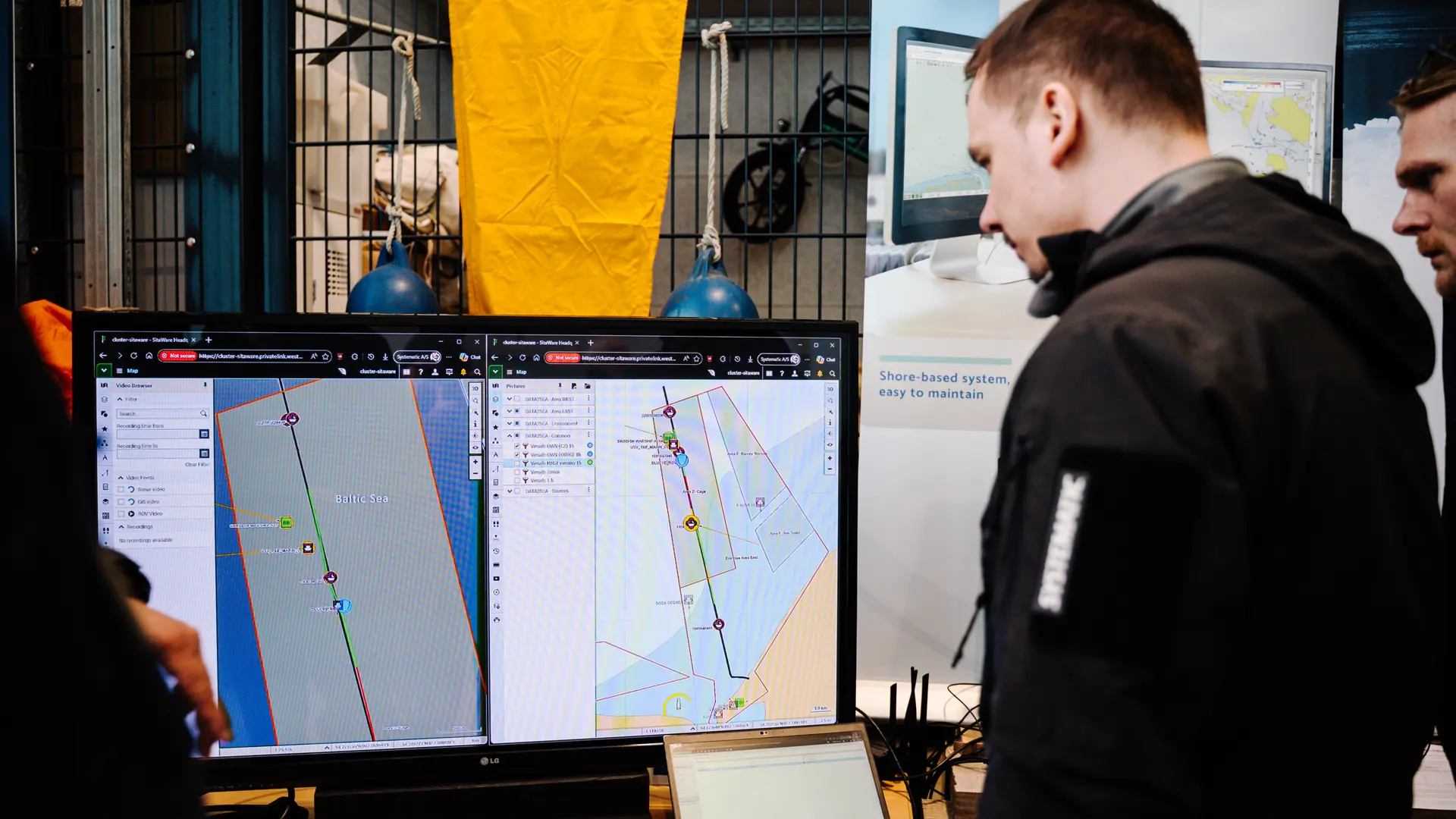
During the tactical challenges, though, my colleague and I proved hard to find. Physically. Not because we were hiding, but because participants expected us to be 10-12 people running our systems, like everyone else. There were two of us. Why? SitaWare is a mature, thoroughly tested product. It just runs. The system automatically detects activity near a cable, a drone zooms in, an underwater robot closes in, without needing a team of operators watching over it.
The mad professor's workshop
Exercises like Data2Sea are rare. But they are exactly the kind of event where you can test technology under realistic conditions. Not on paper with hypothetical examples, but with real systems, real operators, in the right environment, running real scenarios in real time.
It's the mad professor's workshop. Anything goes. Nobody judges you for failing, because the whole point is to find out what works and what doesn't, in a scenario where no lives are at stake.
In our own team, we brought together seven European technology providers for the cable protection scenario. One partner supplied fibre-optic sensors that could detect disturbances on the seabed at long range. Another provided a radar that tracks ships beyond the horizon. Others flew drones equipped with sonar or sent mini submarines down for visual identification. From broad-area surveillance to close-range verification, SitaWare tied it all together, so the team operated as one system rather than seven separate ones.
When the threat is hybrid, the defence must be too

Data2Sea didn't happen out of nowhere. In September 2022, the Nord Stream gas pipelines were blown up in the Baltic Sea. In November 2024, two data cables in the Baltic were severed within hours of each other, one between Sweden and Lithuania, one between Finland and Germany. On Christmas Day that year, the Estlink 2 power cable between Finland and Estonia went down, most likely dragged by a Russian-linked oil tanker. Five cable incidents in the Baltic in two years.
That is what is known as hybrid threats. Attacks that don't look like conventional war but aren't exactly peaceful either. No uniforms, no missiles, just a ship's anchor in the right place at the right time. It is often hard to prove who was responsible, and hard to deter or defend against, because it falls right in the grey zone between civilian and military, between police and defence, between one country's responsibility and the next.
That is precisely the grey-zone problem Data2Sea trained for. Not just the technology, but five nations' ability to work together in real time, with a shared picture and a shared basis for decisions.
What an intense and brilliant experience.
About SitaWare
Systematic’s C4ISR* solution, SitaWare is a command-and-control system that provides a detailed overview of forces, infrastructure, terrain and buildings in a given area, enabling information sharing, planning, coordination and communication effectively.
SitaWare can be used on land, at sea, in the air, in space and in cyberspace, among all domains and among nations. Part of the SitaWare suite is SitaWare Maritime, which provides commanders with maritime-specific capabilities.
SitaWare is used by approximately 50 countries worldwide – including most major NATO countries and NATO partner countries, e.g., Australia, Denmark, Finland, Germany, France, Latvia, New Zealand, Sweden, Switzerland, Great Britain, and the United States.
C4ISR: Command, Control, Communications, Computers, Intelligence, Surveillance and Reconnaissance.
