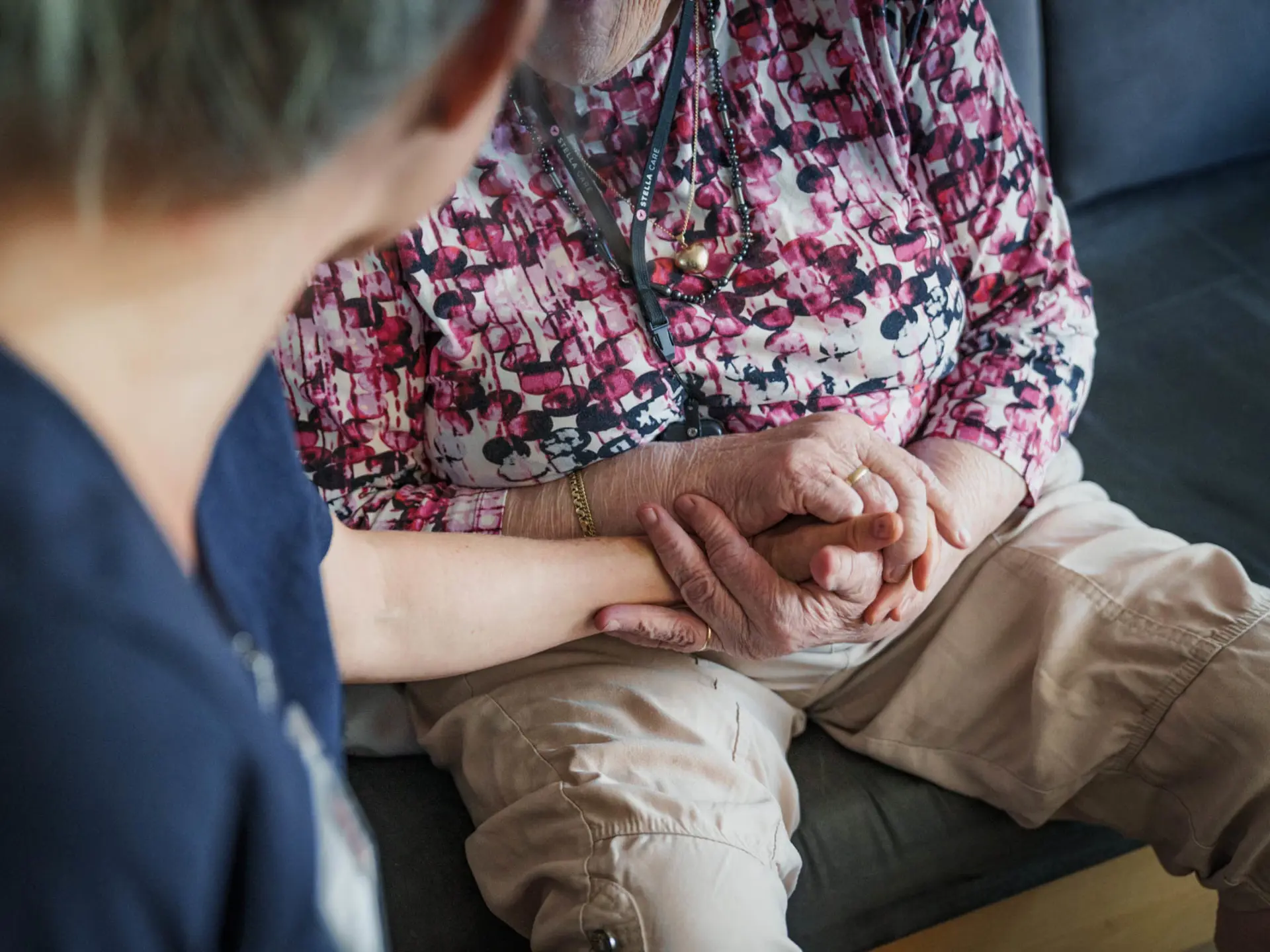
New report: AI moves closer to elderly care – freeing up time for care and compassion
Denmark risks facing a shortage of up to 15.000 social and healthcare assistants and helpers within ten years, according to figures from the Ministry of Senior Citizens. That’s why it’s good news that a new report takes an important step toward using artificial intelligence in elderly care – and thereby freeing up time for care and compassion.
A future workday might look like this: A care worker at a nursing home dictates directly into an elderly citizen’s record instead of sitting down in front of a screen to note changes in meals, care, or visits. Just one example of how everyday life could become easier in the future.
That scenario is moving closer to reality with an AI-based speech recognition system that Systematic is currently developing, based on extensive insights gained from a public–private collaboration project (TALT) with Denmark’s three largest municipalities: Copenhagen, Aarhus, and Aalborg. The AI-based speech recognition system will be an extension of Columna Cura – Systematic’s citizen record system used in the social and care sectors in 38 Danish municipalities.
Municipalities in both Denmark and Norway are closely following the development of the speech recognition solution and are ready to embrace the new opportunities as soon as it becomes legally permissible.
In a new report, the Danish Data Protection Agency and the Danish Agency for Digital Government have examined the TALT project in depth, outlining what is required before speech recognition can become part of daily life in elderly care.
New report paves the way for responsible AI use

“There’s still some way to go before speech recognition becomes part of everyday work in elderly care, but the new report provides valuable recommendations on how to use AI responsibly as a fully integrated alternative to manual reporting,” says Brian Mandal Fisker, Vice President at Systematic.
Among other things, the report highlights the need to adjust laws and regulatory frameworks to provide a clear legal basis for processing personal data, clarify the roles and responsibilities between public and private parties, and define parameters for testing and training AI on citizen data.
TALT has been chosen as a pilot project in the report to serve as an example and inspiration for other AI projects. This provides important guidance from the authorities on overcoming the remaining barriers to using AI safely and responsibly in elderly care.
Strong interest – bidding for AI in Norwegian elderly care
Over the next two years, Systematic will expand Columna Cura with AI-based speech recognition and intelligent support tools – an important step in bringing Columna Cura to Norway, where the company is currently bidding on four major projects. Like Denmark, Norway faces the same challenge: too few care workers for the growing number of elderly citizens who need care and assistance.
In Denmark alone, the Ministry of Senior Citizens expects a shortage of 15,000 care workers within the next decade.
“We’re seeing great interest in the TALT project and the solution we’re developing – both from Danish municipalities and from countries like Norway. The potential is huge: by freeing up time for care through simple, intuitive documentation, we can give professionals more time for the people they care for. That’s why our ambitions are equally high. Over the coming years, we expect to capture up to 50% of the Norwegian market and a similarly large share in Denmark,” says Nikolaj Bramsen, CEO at Systematic.
Ready for use within two years
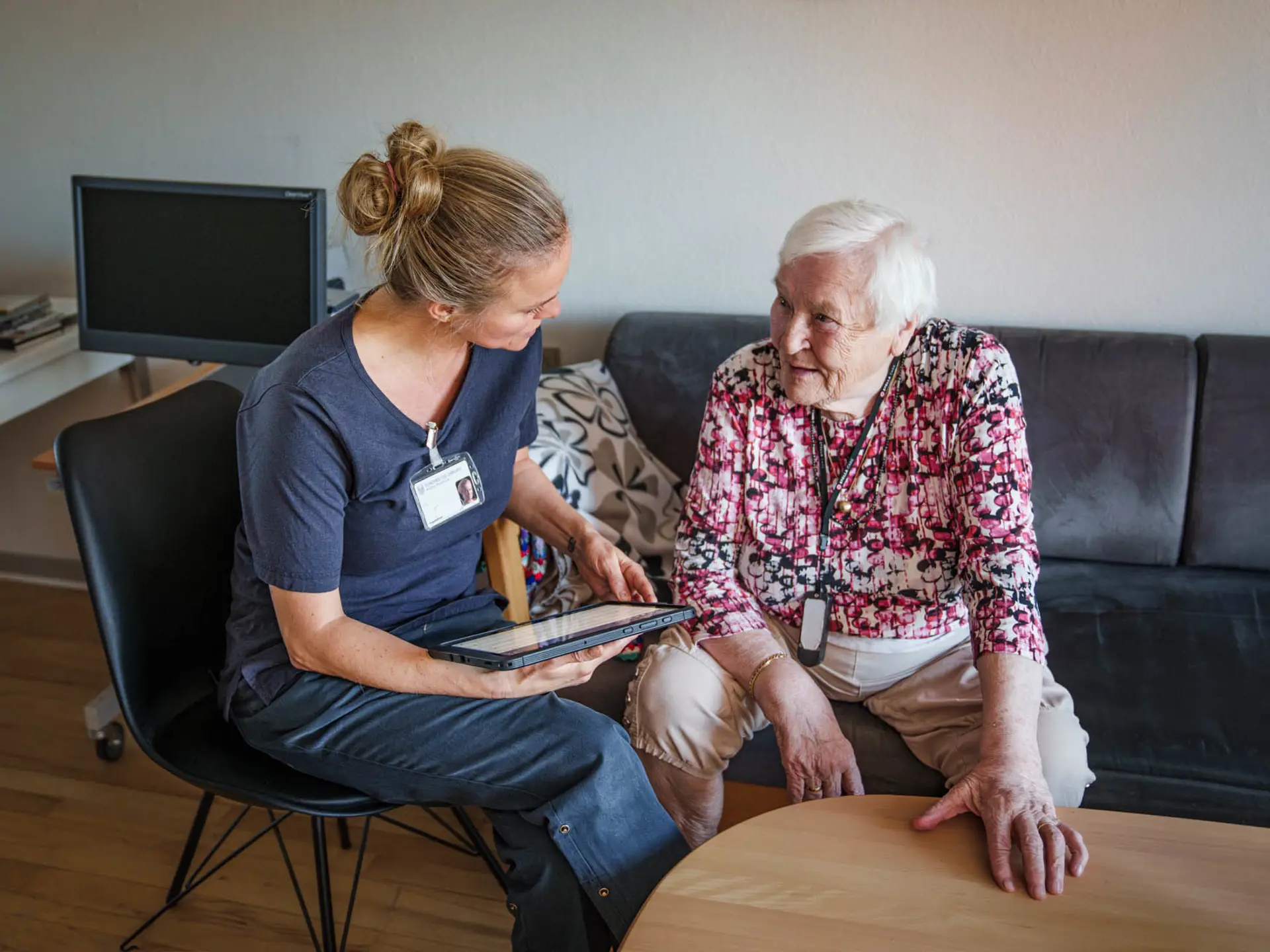
The ambitious expansion of Columna Cura will make it possible to dictate directly into the system.
“The speech recognition module is being developed in close collaboration with municipalities and frontline staff. This isn’t a solution we’re building for them, but with them. That’s why we know the technology truly makes a difference – it saves time, it’s easy to use, and it fits seamlessly into everyday workflows,” says Brian Mandal Fisker.
He expects the speech recognition module to be in use in both Denmark and Norway within two years. At Systematic, work is progressing intensively to prepare for the rollout of the new functionality to municipalities. The sooner the framework conditions are in place, the sooner elderly care can reap the significant benefits of AI.
Corporate news
 Danish defence software at the heart of international subsea security exerciseDefence forces, police and companies from five countries have spent two weeks in the Baltic Sea practising protecting undersea cables, offshore energy sites and ports — with Danish software at the heart of the operation.Read more
 Ukrainian combat medics give feedback on Danish system for wounded soldiers50 combat medics from the Ukrainian front line visited Danish software company Systematic in Aarhus this week to see and provide feedback on a Danish-built military medical system for wounded soldiers.Read more
 Danish software company conquers Nordic capitals in three yearsSystematic wins contract with Finnish libraries worth EUR 3.6 million as part of the company's goal to supply software solutions to the major libraries in Nordic capitals.Read more
 Systematic recruits another top-profile from the Danish Armed ForcesDefence organisations worldwide have invested massively in advanced software – but are still thinking in analogue terms. At Systematic, Susanne Kiholm Lund will strengthen customers' use of the technology so they get its full operational effect.Read more
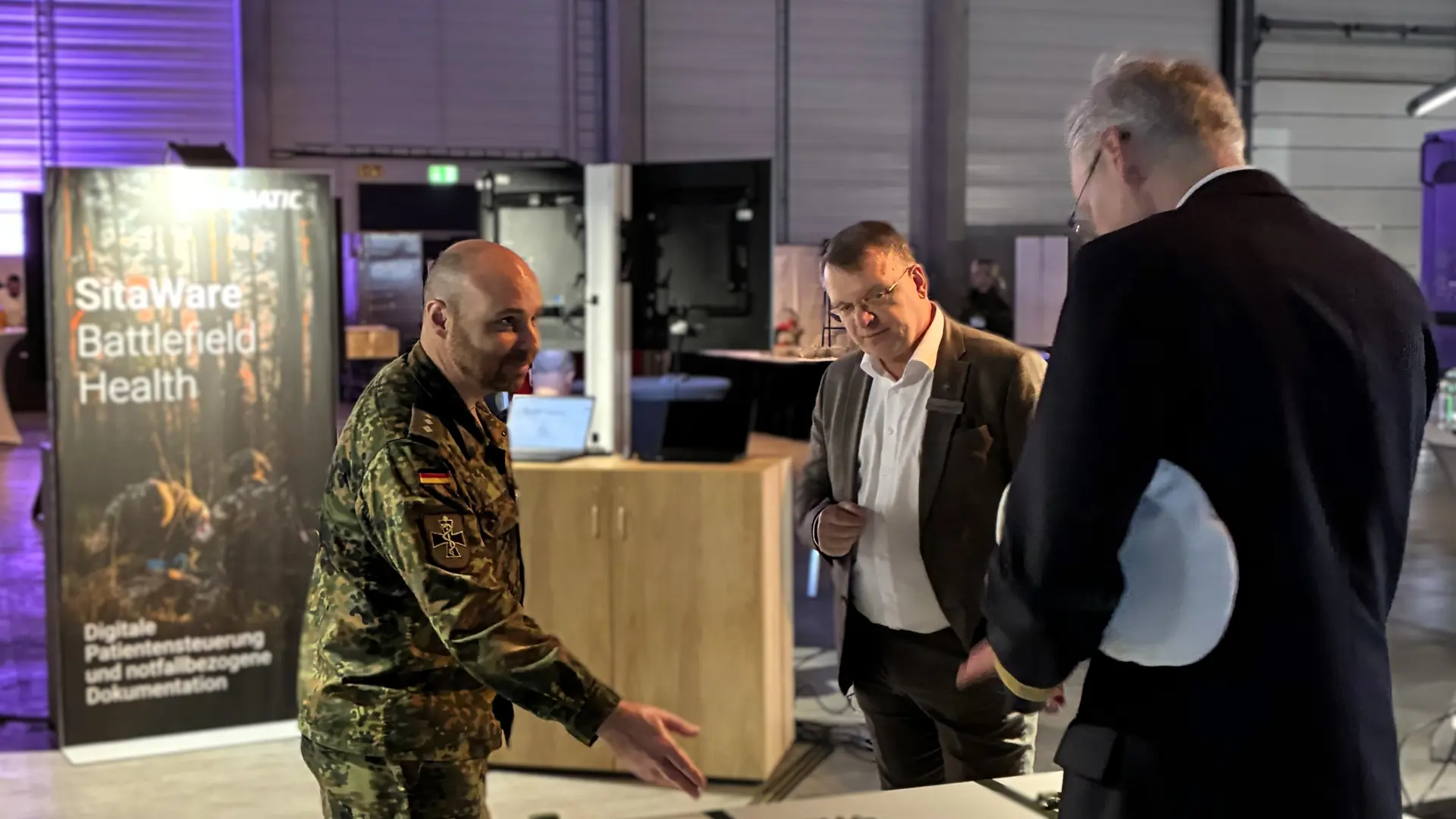 Danish healthcare system for wounded soldiers showcased at major NATO exerciseWhen the German armed forces this spring exercised the transport of wounded soldiers from Lithuania to Germany, a Danish-developed IT system was presented for the first time as the system that will digitalise the handling of casualties going forward. The exercise made abundantly clear why it is needed.Read more
 France begins SitaWare Headquarters deploymentThe French Army has just taken SitaWare into use – the same system that NATO's land forces are using - with units of the 3rd division pushing for full user certification.Read more
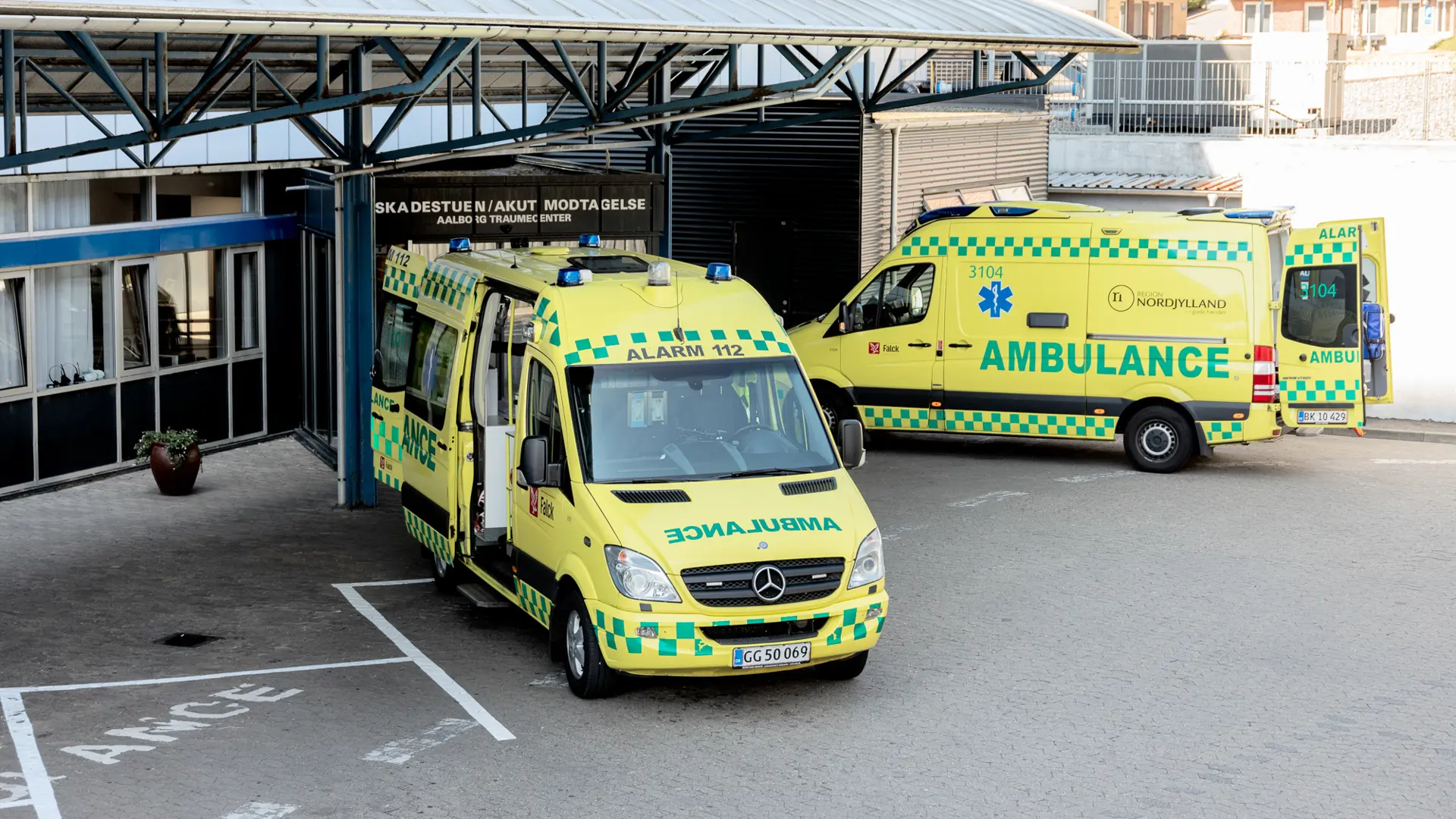 Mobile app improves working conditions in Danish emergency departmentA new Danish research project shows that a simple mobile app can significantly improve working conditions, communication, and task management in a hospital emergency department.Read more
 Systematic appoints experienced senior civil servant and adviser to its BoardFormer Permanent Secretary to strengthen Systematic’s strategic focus on defence, security and critical infrastructure.Read more