
As Sweden mandates staffed school libraries, Stockholm turns to Danish software
The new system, Cicero, will allow school librarians to spend less time on administrative tasks and more time inspiring and supporting students.
Like many other European countries, Sweden is grappling with declining reading skills among children and young people. In response, a new law came into force on 1 July 2025 requiring all Swedish schools to provide a staffed school library with personnel who can actively support pupils. While Sweden already had requirements around school libraries, the new law tightens those rules considerably, with a specific focus on staffing and active library provision. But a staffed library also needs a strong library system.
The Danish software company Systematic has just won the tender to supply a new library system to all of Stockholm's schools. The existing system, Book-IT, which has been in use for over two decades, is being replaced by Cicero - a modern, web-based solution already used by more than 500 public and school libraries across Sweden, as well as a large number of libraries elsewhere in the Nordic region and in Germany.
Cicero was originally developed as a shared national platform for all of Denmark's public and school libraries - a model that remains unique in the world. All 98 Danish municipalities use the same system.
Time for the things that truly matter

The system itself is not the point. It’s not the software that makes a child pick up a book. It is the librarians, teachers, parents, and friends who inspire. But when librarians spend large parts of their working day on administrative tasks in front of a screen, there is less time left to guide and support the pupils in their care.
"We want to give school librarians a modern, stable tool that supports a well-organised library service for pupils and teachers across the city's schools. The system should free up time for what really matters: meeting pupils where they are and strengthening their love of reading and their ability to navigate an information-rich world," says Sebastian Waller Stålnacke, project manager for digital library services at Stockholm’s Utbildningsförvaltning (the Stockholm Education Authority).
The agreement covers around 97,000 pupils across approximately 170 schools, with a collection of 2.3 million physical materials. The contract runs for four years, with the option to extend for up to ten years in total.
"Cicero is straightforward and intuitive to use regardless of library size. That flexibility makes Cicero a natural choice, now that all Swedish schools - whatever their size or staff structure - are required by law to offer pupils a staffed library," says Jakob Ilum Damsgaard, Director of Systematic's Library division.

Cicero is becoming the standard for Swedish school libraries
Stockholm's schools are far from the first to adopt Cicero. The system is already in use at more than 500 libraries across Sweden - from the smallest schools to large city library networks. With Stockholm, Systematic has secured its largest school library contract internationally to date, which Jakob Ilum Damsgaard sees as marking a new chapter in the company's presence in Sweden.
"Sweden is in the middle of a significant push to raise the standard of school libraries, and we are glad to play a part in that. But technology is the means, not the end - the legislation is about ensuring that children and young people have access to a librarian who has the time and space to meet them where they are and help them find what sparks their love of reading and deeper learning," he says.
About the contract
Stockholm's Education Authority has chosen Cicero as its new school library system, replacing Book-IT from supplier Axiell. The contract covers approximately 170 schools with just over 97,000 pupils across 177 library units, which together hold around 2.3 million physical materials. The contract runs for four years with the option to extend for up to ten years.
About Cicero
Cicero is developed by Systematic and is the national library system for all public and school libraries across Denmark's 98 municipalities - one of the few countries in the world with a single shared system at national level. It is also used by more than 500 libraries in Sweden, by Bücherhallen Hamburg, and by the Deichman libraries and all school libraries in Oslo. Implementation is currently under way at the Helmet libraries in Helsinki. Cicero is delivered as a cloud-based Software as a Service solution, handling everything from loans and collection management to user administration and data analytics. The system serves more than 12 million unique users each year.
About Systematic
Systematic is an international software company founded in 1985, headquartered in Aarhus, Denmark, with 17 offices around the world - including an office in Stockholm. The company employs around 1,200 people and delivers software solutions in defence, healthcare, national security, critical infrastructure, and libraries to customers in more than 50 countries.
Latest news
 Finland's largest library consortia selects new IT SystemThe Helmet libraries in the Helsinki region will replace their current IT system with the Library Management System, Cicero, used by all public libraries in Denmark and leading libraries across Norway, Sweden and Germany.Read more
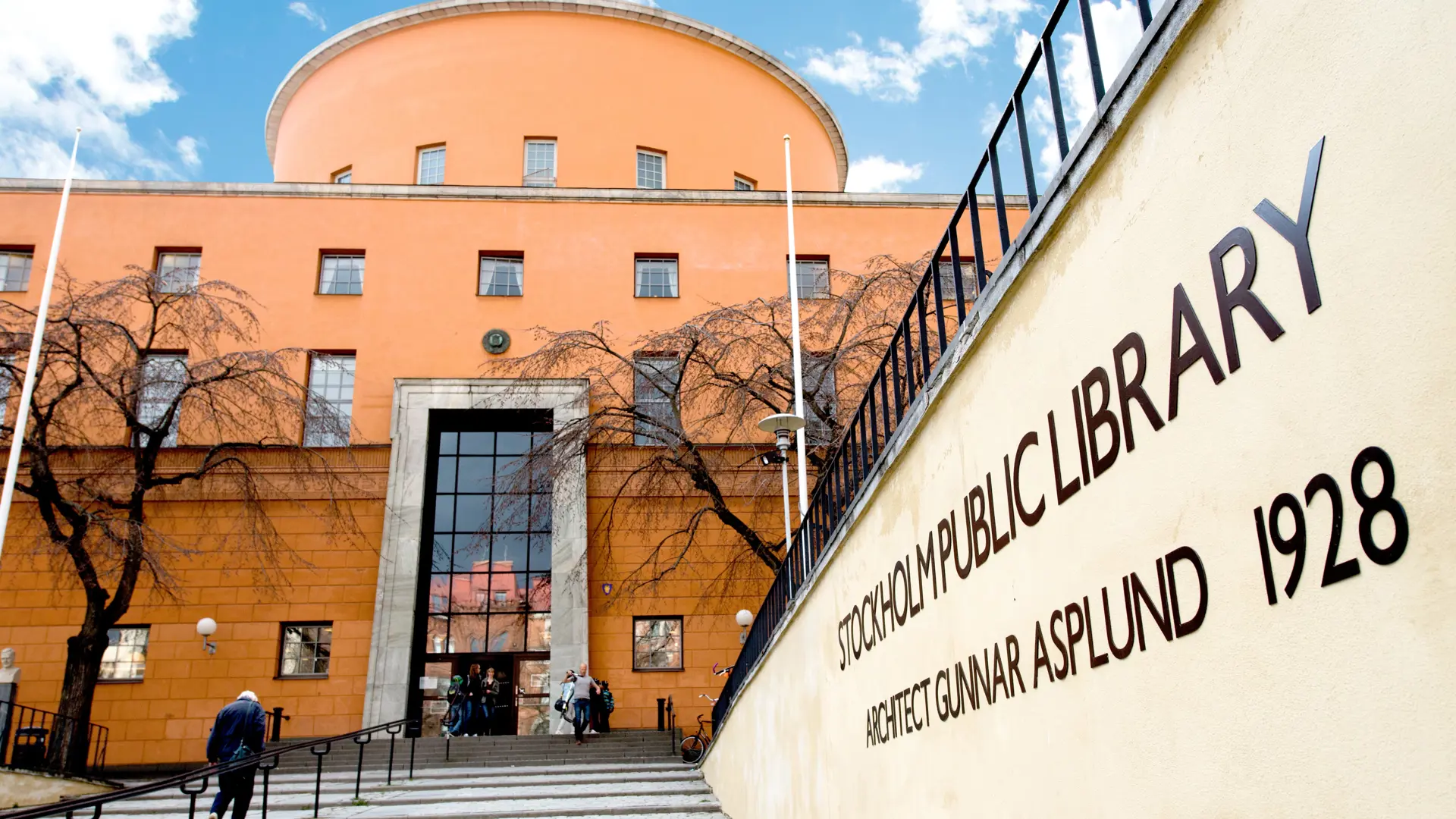 Stockholm Public Library goes live with new Danish library solutionSweden’s largest library replaced its core system mid-operation: 1.5 million items and 12.7 million loan records were transferred in one fell swoop. The library now has a shared digital platform that automates working procedures while freeing up time for library personnel.Read more
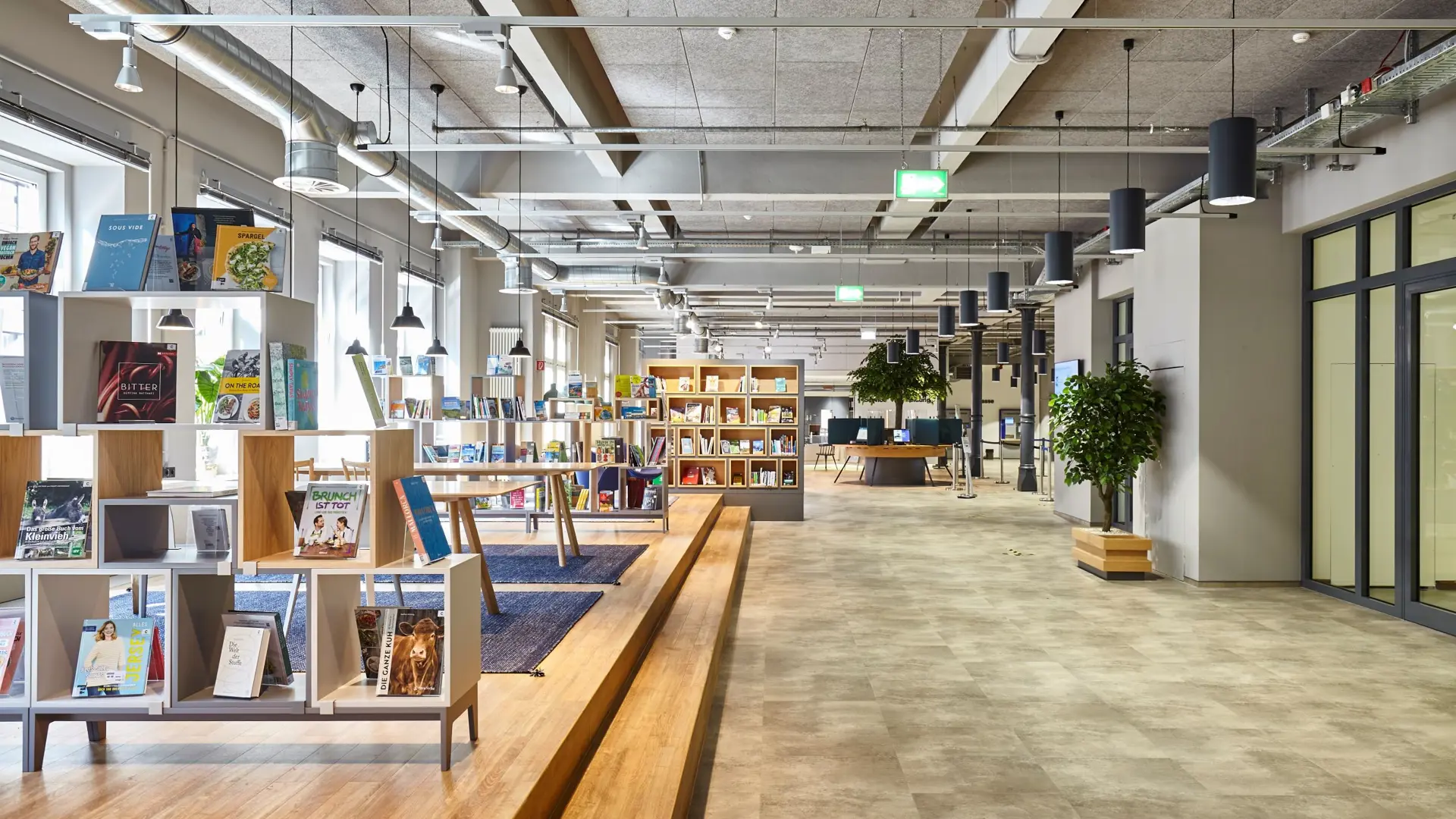 Bücherhallen Hamburg completes successful switch to new library systemCompleted according to plan, Hamburg’s 32 public libraries and two library buses made a smooth transition to the Danish library system Cicero, giving the libraries a significant technological upgrade.Read more
 Systematic re-wins valuable contract for Denmark’s library systemThe software company Systematic has just signed an important, three-digit DKK million contract with the Danish municipalities’ joint IT organisation KOMBIT to continue the development and operation of the IT system for all public and school libraries in Denmark until 2038.Read more
- Stockholm Public Library and Systematic pioneer the future of library servicesNew technology deployed at Stockholm libraries will empower staff through automated processes, enhanced workflows, and improved user accessibility.Read more
 Systematic wins important contract for new library system in SwedenThe Danish software company takes another big step into the European library market after winning a tender worth SEK 100 million for Stockholm Public Library.Read more
 Danish library system breaks new ground in GermanyDenmark’s Cicero system is set to modernise public libraries across Hamburg, marking Systematic’s first foothold in the German library marketRead more
 Four remarkable libraries nominated for the Public Library of the Year 2023 awardThis year, 16 libraries from 11 countries have sought nomination for the Public Library of the Year 2023 award.Read more