
Know where your colleagues are, without the search
When a colleague raises a personnel alarm, Columna Flow Search & Find shows who's closest. It works with your alarm and nurse call systems to pinpoint where the alarm came from and alert the nearest colleague who can respond.
The same view helps you find any colleague and see whether they're free the rest of the shift, so less of the day goes on searching the building.
From raising the alarm to reaching the right person
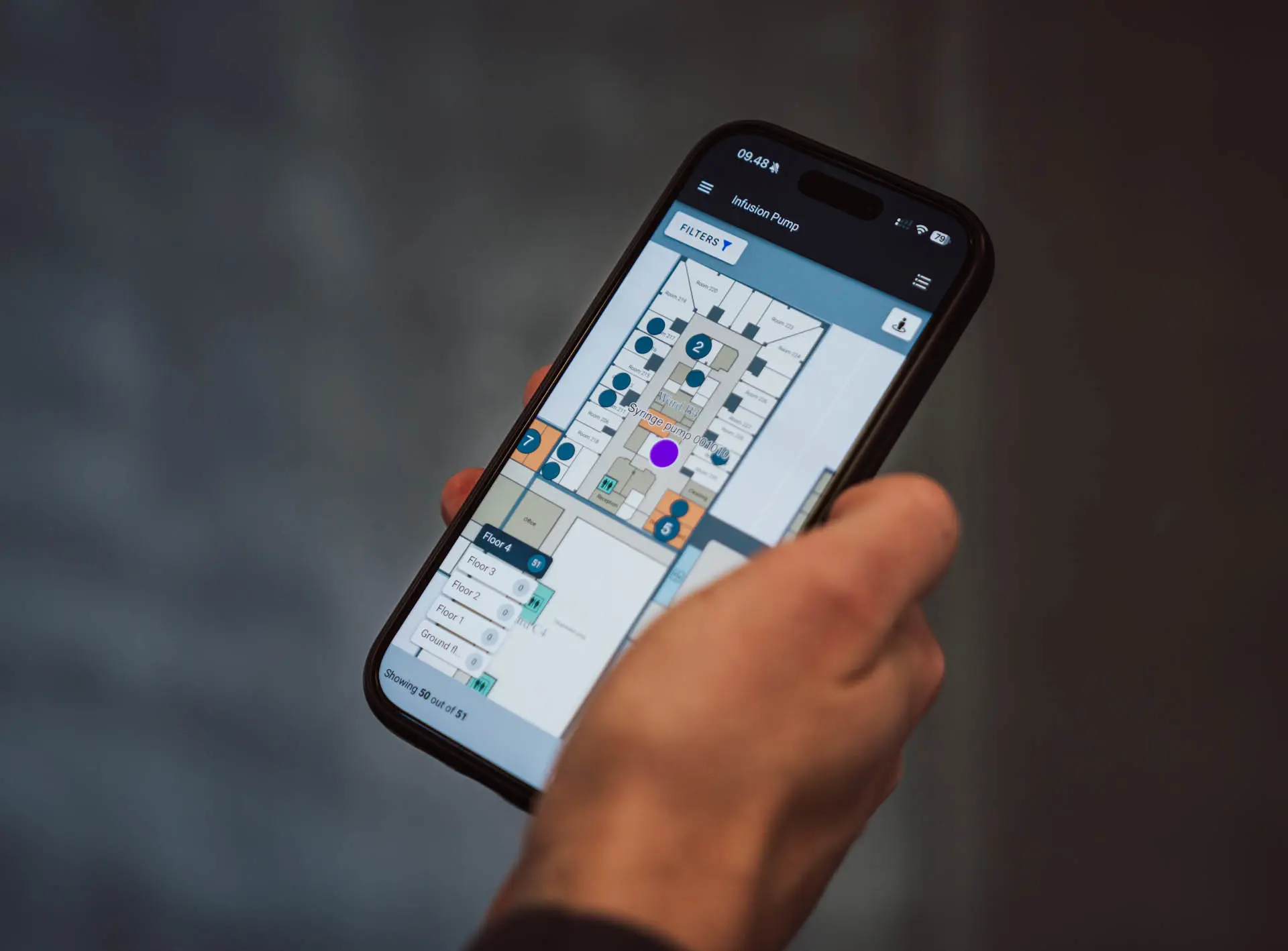
A fast response starts with knowing exactly where a colleague is. Search & Find gives you that straight away, on a map or ward view, so you can go to them directly instead of checking rooms and corridors. It works just as well for the everyday moments: finding a senior nurse or a specific doctor becomes a quick check rather than a round of calls, messages and a walk.
What changes across a shift
Knowing where colleagues are and who's free changes the rhythm of a shift. When an alarm goes off, you can see where it came from at a glance instead of searching, routine questions get answered without walking the ward, and staff interrupt each other less. The result is a ward that stays calmer day to day and responds faster when it counts.
In Danish healthcare, staff location using GS1 standards has been documented as a way to locate staff and create calm on the ward (GS1 Denmark, with Region Midtjylland).

Works with your nurse call and alarm systems
Search & Find connects with the nurse call, personnel alarm and communication systems your hospital already uses, so location sits alongside the alerts your teams already rely on – no separate tool to learn. When an alarm is raised, you can see straight away where it came from.
Learn more about Columna Flow IoT, interoperability and integrations →
