
One record for the patient's care – simple, clear, and with AI
Columna gives you one record for everything in a patient’s care journey, and for the clinical and administrative work around it. The record follows the patient, so you and everyone else involved in their care can open it across sites, specialties, and sectors – on mobile, tablet and PC.
AI prepares the documentation in the record, so you spend less time on administration. Nothing is saved until you approve it. You connect the systems you need, and the data stays in the source system. You stay in control of your data, your clinical decisions and your choice of supplier, because Columna is built on open standards.
The EHR hospitals rely on every day, and have for more than 20 years

AI prepares the draft, you approve it
With AI in Columna, you get more time with patients and less time on a screen.
While you focus on the patient on the ward round or in the consultation, AI works in the background. It prepares the documentation as structured data in the record and drafts notes and actions in the record. You review and approve.
Years of documentation are gathered into short summaries with references back to the original notes, so you can follow the patient's course quickly. With semantic search, you choose what to look for and matching terms are marked in the text, including terms that differ from the words you searched on. Nothing is removed.
AI in Columna is available when you open the record on mobile, tablet, and PC.
The EU AI Act puts human oversight at the centre of AI in healthcare. Human oversight is built into how AI works in Columna: you review and approve what the AI prepares.

The record follows the patient
Patients and treatment move. The record moves with them.
With Columna, the patient's record is to hand wherever you need it: at the bedside in hospital, in a community care setting, or at the patient's home.
You can document, view information and medication, and follow test results directly from mobile, tablet, and PC.
The record gathers tasks, messages and status in one place, in the patient's context. Clinicians involved in the treatment share the same up-to-date picture of the patient, and you can follow tasks and answer messages directly in the system.
That keeps the patient’s care journey connected for every professional involved, wherever they work.

Your clinical data stays yours
It belongs to you and your organisation, today and in the future.
Columna is built on open standards and an architecture that keeps your organisation in control of its data – for daily clinical use, for analysis, and for research. This is in line with the European Health Data Space, which sets common rules for health data used in care, research and analysis.
You choose the systems and partners you work with, and they connect without anyone starting over. FHIR-based interfaces open the record to third-party applications, analytics platforms and AI solutions, so you are never tied to a single supplier. Data is exchanged in real time.
What you get from the open platform:
Share data for primary clinical use, and for secondary use in research, quality work and analysis, on your own terms
Connect new technologies and partners to the platform at the pace that suits you
Build on an established architecture that is developed continuously, so you can keep pace with technology over time

A European partner with a long-term view
Systematic is a privately owned European company with no external shareholders and no debt. We put our profits back into product development, so we make decisions with a long-term view.
Our roots are in defence software industry, where systems must keep working under critical conditions. We build Columna with the same discipline.
The AI support runs in your hospital’s own environment, using EU-based suppliers, and your clinicians approve everything it prepares.
Your data stays in the source system. Your hospital keeps full ownership of it and is free to change supplier without losing it.
Go-live safely. We are with you afterwards
Our implementation approach takes you live safely and leaves you with ongoing support.
The approach draws on more than 20 years of healthcare IT projects of every size. It sets out clear phases with defined responsibilities at strategic, tactical and operational level, so everyone knows who does what.
Systematic is one of only a few companies in Europe, and the only one in the Nordics, certified at CMMI level 5. Our processes are documented and measured, which makes delivery predictable.
On large deployments, our specialists work close to your clinicians and super users from day one and step back as the solution becomes part of daily routine. How much we are involved depends on your size and requirements. The aim is for your own teams to take responsibility for running and adapting the solution.
After go-live, your clinicians and IT organisation shape the next generation of functionality with us in regular forums, year after year.
What the record covers
Columna brings clinical and administrative work into one solution. Expand each area below to see what you get.
The record and clinical documentation
You record notes, measurements, observations, diagnoses, and treatments in structured templates in one place. The information can be reused across the patient's record, and you have an overview and easy access to information from connected systems. The templates follow the organisation's own clinical model, and you can adapt them locally. Data is available for quality work and research.
Medication from prescribing to administration
You handle the medication process in the record: prescribing, dispensing, administration, and supply. Columna supports both simple and complex drug treatment and is integrated with pharmacy and medication systems. The current treatment looks the same wherever in the hospital the clinician is working. That eases the documentation work around medication and makes clear what the patient has received.
Booking and capacity
You plan appointments, rooms, equipment, and skills in the same system as the patient's care journey, from series and group appointments to waiting lists and capacity planning. The department and the clinician can follow the day's schedule easily and keep a running view of patient flow.
Requisitions and results
You order examinations and tests, and receive the results in the record: radiology, microbiology, biochemistry, pathology, and genetics. You can follow a requisition along the way, and the result arrives in the same place as the rest of the documentation. You configure thresholds and reference ranges yourself, so deviations are visible when a result is read.
Patient administration and care pathways
Administrative registrations around the patient are part of the clinical documentation. Contacts, pathways, billing, and reporting are handled in the same system, so information as a rule only needs to be recorded once. The administrative work follows the treatment and adds no separate task on top.
Emergency department and prioritisation
You have your own overviews in the emergency department, where you can prioritise and follow patients while they are in the department. You coordinate bed capacity and patient flow across departments, so it's visible where there is space and where the patient goes next. The area is closely linked to the rest of the documentation, so the information follows the patient further into the hospital.
Specialised clinical areas
Beyond general clinical documentation, Columna supports areas with their own requirements, including anaesthesia and intensive care, chemotherapy protocols, paediatrics with linked mother and child records, compulsory treatment with support for the legal processes, infection tracing and major incident preparedness. These areas sit in the same record as the rest of the documentation.
Patient access and involvement
Patients can follow their own course of care, communicate with the department, book appointments themselves, read their record, and take part in video consultations. Patient-reported information can sit alongside the clinicians' own registrations in the clinical overview. That gives the department a picture of the patient between visits.
Access on the move – web and mobile
You open the record in the browser, and on mobile and tablet you carry on where the patient is. Documentation, requests, prescribing, and further planning happen at the bedside. The task list shows what needs doing now, and the messaging function lets you reach a colleague about the same patient.
Continuity when the patient changes sector
Systematic also supplies community care systems and cross-sector data sharing, so the record connects to the care that comes before and after the hospital. When a patient is discharged or admitted, professionals in the other sector can follow along. Community health and care staff can see, in their own system, the latest record notes, the discharge summary, medication administration and test results, along with circumstances for the patient. If the community care provider offers equivalent access, hospital staff can in turn see the observations, medication administration, and the care and services given in the patient's home. Access is controlled by role, so each professional sees what their work requires.
Open interfaces and integration
The record is built to work with the rest of your systems through an open API based on HL7 FHIR. You can:
Connect: add your own and third-party solutions
Extract: pull data into your own data warehouse without affecting operations
Carry context: pass the patient context into third-party clients where a deep integration isn't necessary
Select customers


Questions about Columna?
To find out how the record works with your existing systems, or what a transition means in practice, contact Henrik Rosenberg Rasmussen, Senior Director at Systematic Healthcare. He has more than 20 years of experience with regional and community health IT systems and works to create a connected healthcare system.
Latest news and case studies
News, product releases and case studies from the hospitals and municipalities using our solutions today.
Sign up for our monthly newsletter, Care Connected, to stay up to date with the latest inspirational case studies, news stories, and digital healthcare innovation news.
 How UMC Utrecht tracks 5,500 medical devices across two hospitalsUMC Utrecht wanted staff to find the right device when they need it, without every department running its own fleet. This is how they made it work with Columna Flow Search & Find.Read more
 The digital decisions a new hospital has to make during designA delegation from Manchester University NHS Foundation Trust visited Aalborg's new hospital in September. The lessons were about timing: which digital coordination decisions belong in the design phase.Read more
 What's new in Columna Flow, shaped by the hospitals using itTwo releases since June, one six weeks early. Task overviews open faster, recurring lists stay clean, and planned work now carries a clock icon - several changes because a hospital asked for them.Read more
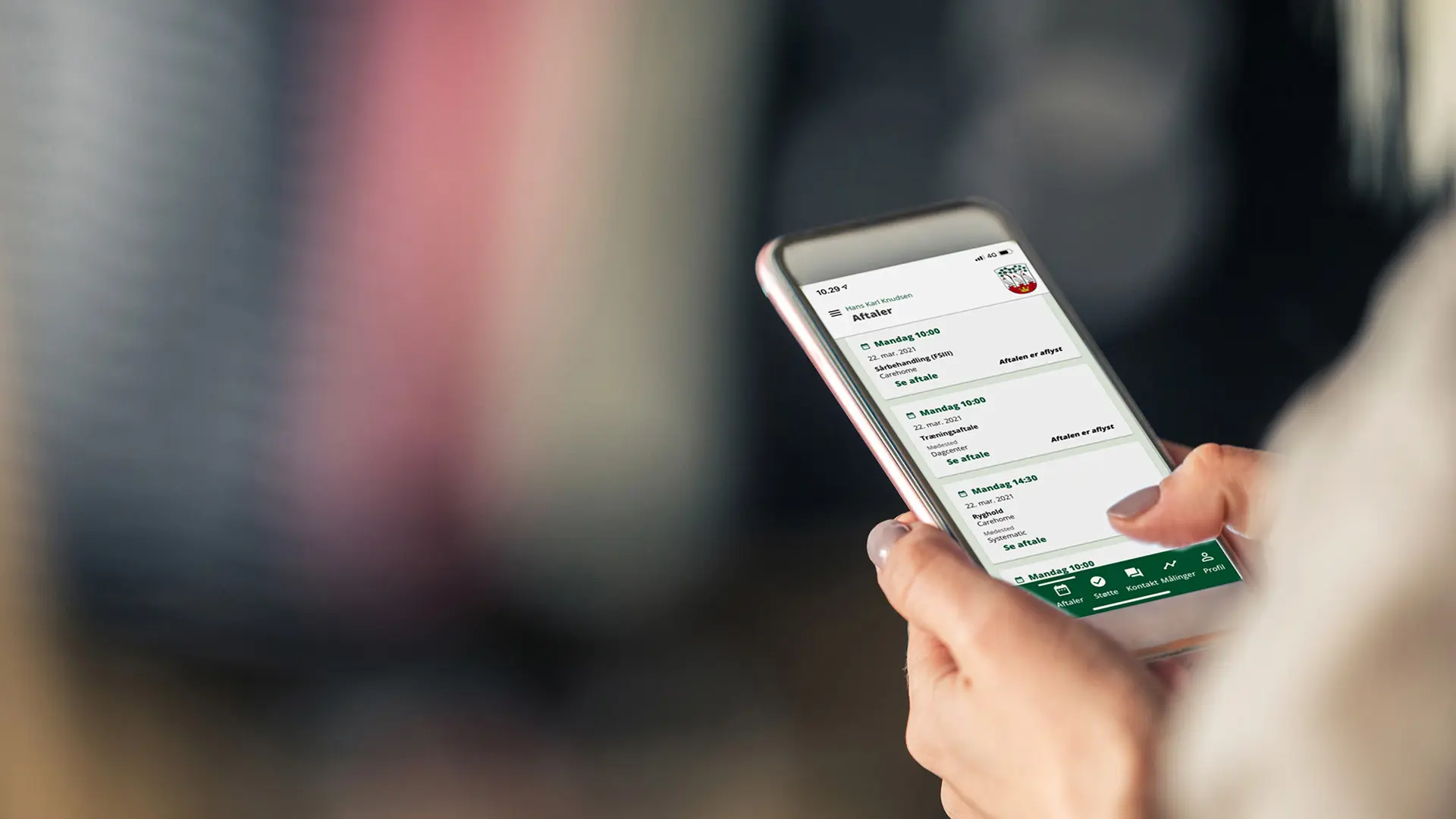 Sønderborg Municipality rolls out Cura Dialogue to all residentSønderborg Municipality rolls out Cura Dialogue to all residents, giving citizens and relatives digital access to appointments, messages and care records.Read more
 Cura Arrival makes daily life easier in Copenhagen MunicipalityWhen residents arrive at the Centre for Rehabilitation Nørrebro, they no longer need to check in at the reception desk. A scanner in the waiting area handles the whole process — and both residents, reception staff, and therapists have noticed the difference.Read more
- Cura Dialogue: When the citizen becomes captain of their own lifeIn Sønderborg Municipality, they've turned the approach to implementing Cura Dialogue on its head. Instead of asking 'What do we need the system to do?', they now ask: "What does the citizen need?"Read more
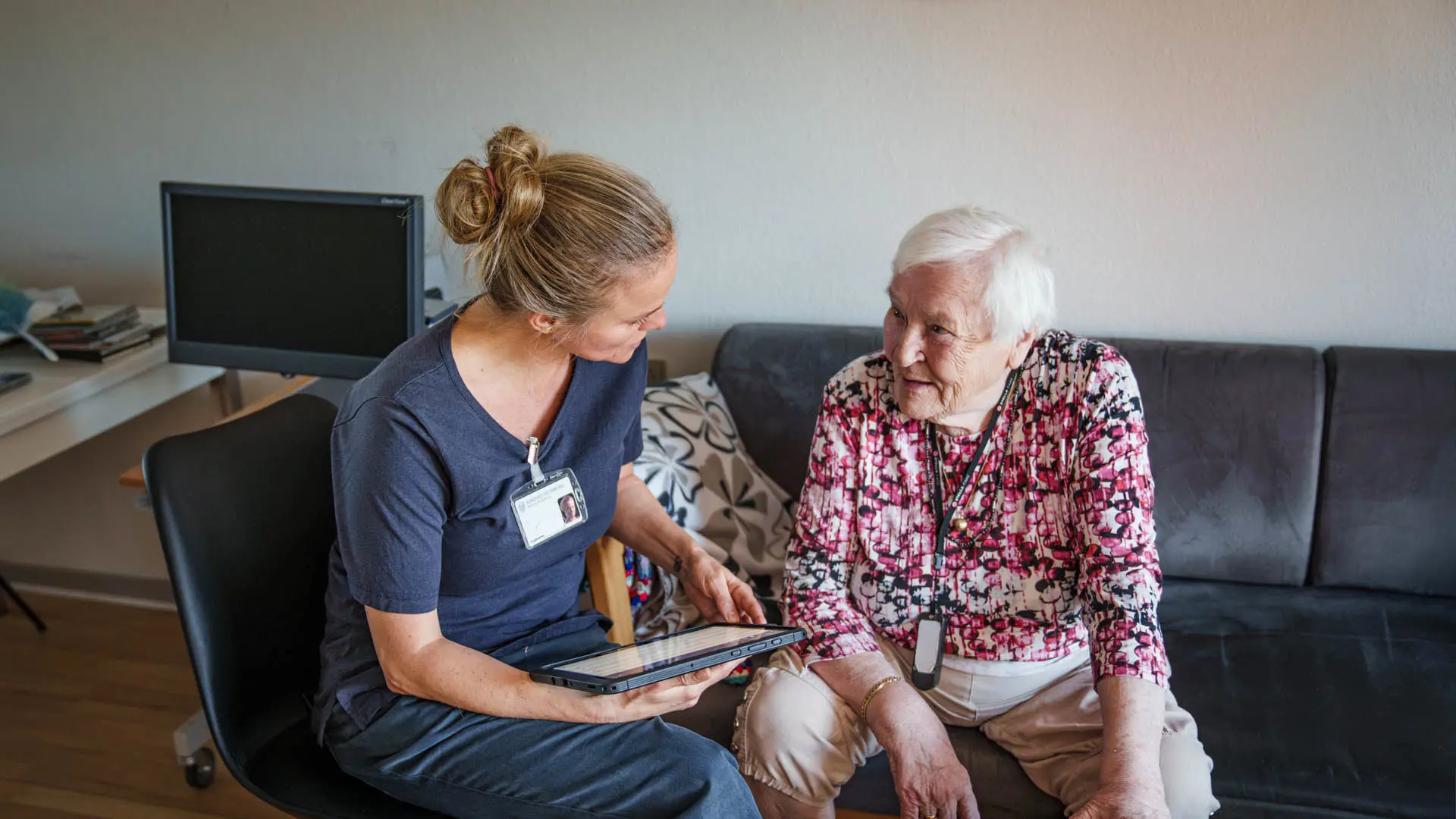 Copenhagen Municipality streamlines workflows with mobile documentationWith Columna Cura, healthcare professionals in the Copenhagen Municipality can document citizen information efficiently on mobile and tablet on the go and during visits.Read more
- App improves work environment and patient coordination in the emergency department at Aalborg University HospitalFewer phone calls. Better overview. And coordinators want to keep it. That is the short version of the results from Aalborg University Hospital's third pilot of Clinical Tasking, a task and coordination platform for emergency departments.Read more
Downloads
Dive into some of our solutions and the benefits they provide. Explore our downloads section here.
 Webinar on demand: what's working in acute and out-of-hours coordinationA coordinating doctor interrupted every two and a half minutes. Two hospitals on what they changed in acute and out-of-hours coordination, plus where integration takes it next. One hour, on demand.Read more
 Unlock the benefits of equipment trackingExplore potential technology-enabled solutions to emergent challenges related to equipment managementAccess the ebook
 On demand webinar: IT implementation learnings from two leading hospitalsDownload our webinar where we share the key take-aways from digitalisation projects of two leading hospital boards in Northern Europe.Download webinar
 How to tackle NHS burnout with digital solutionsValuable insights on beating burnout in healthcareDownload the ebook
 Do you know where your healthcare is in 2030?Explore five trends which will define the future of healthcare towards 2030.Download the brochure
 Valuable implementation learningsDiscover how leading hospitals have successfully implemented health IT.Download ebook
 Powering-up patient care - in your pocketDiscover how advanced mobile workflows optimise communication and conferring.Download the ebook
 6 reasons why you should digitalise task managementDiscover how digitalising task management has helped others optimise patient flow.Download the ebook